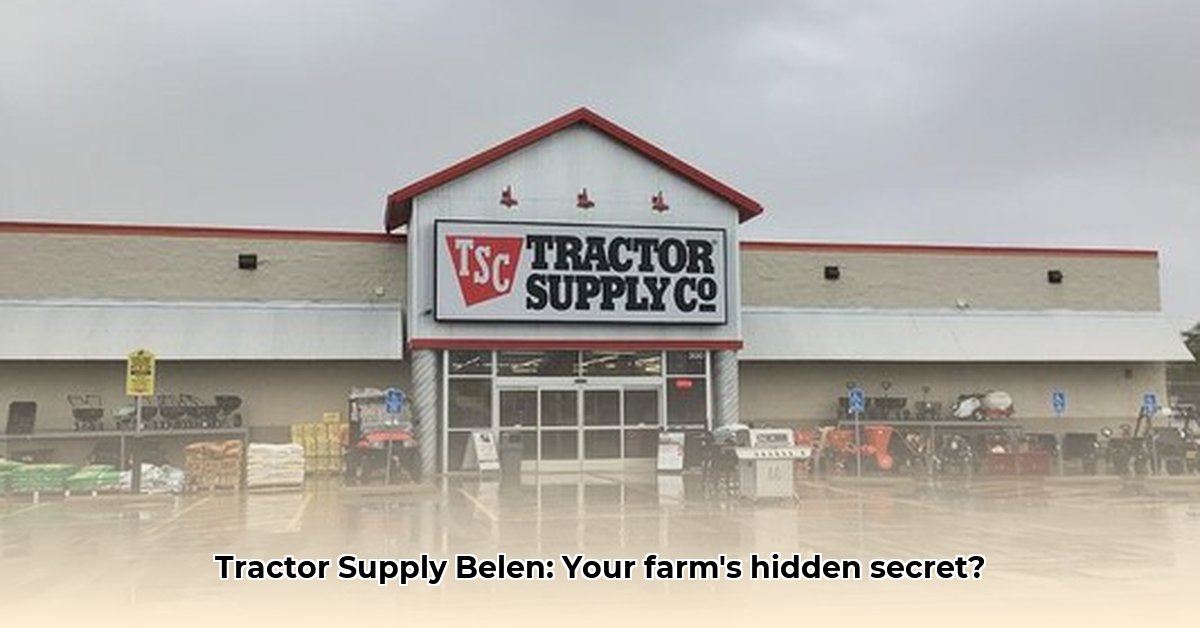
Tractor Supply Belen: Supporting Sustainable Agriculture in New Mexico
Tractor Supply Company (TSC) in Belen, New Mexico, serves as a vital resource for local farmers and ranchers. This article examines its role in providing sustainable agricultural supplies and its broader contribution to environmentally conscious farming practices in the region. We explore the store's offerings, compare its sustainability initiatives to other local suppliers, and discuss the need for more transparent data to fully assess its impact. For more information on the Belen store, visit the Belen TSC page.
What Tractor Supply Belen Offers: A One-Stop Shop for Sustainable Farming
Tractor Supply Belen offers a wide range of products and services catering to the needs of local farmers and ranchers. These include livestock feed, fencing materials, tools, and pet supplies. However, the store's commitment to sustainable agriculture is a key area of interest. The availability of organic seeds, water-efficient irrigation systems, and other eco-conscious products directly impacts the environmental footprint of local farming practices. While TSC aims to support sustainable options, further investigation is needed to quantify the extent of its offerings in this area. Are organic seeds a prominent feature of their inventory? What percentage of their irrigation system sales are water-efficient models? These quantifiable metrics would better demonstrate their contribution.
Tractor Supply Belen and Sustainable Practices: A Deeper Look
Tractor Supply's role in promoting sustainable agriculture in Belen involves several interconnected factors. These include the sustainability practices of its suppliers, the store's own environmental footprint (energy consumption, waste management), and its engagement with local sustainable agriculture initiatives. Transparency in its supply chain is paramount to building trust with environmentally conscious consumers. To provide a comprehensive assessment, data on the sales of sustainable products at the Belen store is crucial, along with customer testimonials (with consent) illustrating their experiences with these products. A comparative analysis with other agricultural supply stores in Belen would further highlight Tractor Supply's position within the local market. How do the prices of sustainable products at TSC Belen compare to competitors? This data could reveal whether TSC is a price leader or follower in the sustainable supplies market.
Comparative Analysis: Tractor Supply Belen vs. Competitors
A comparative analysis of Tractor Supply Belen with other agricultural supply stores in the area is essential for a complete evaluation. This comparison should focus on pricing, the availability of sustainable products, and the overall commitment to environmentally friendly practices. Does Tractor Supply offer a wider selection of sustainable products compared to its competitors? Are prices competitive, or do they present a premium for eco-friendly choices? Gathering this data will provide a more nuanced understanding of TSC’s role in the local market. For instance, a direct comparison of pesticide and fertilizer options could reveal differences in the availability of organic alternatives.
Community Engagement and Future Initiatives
Understanding Tractor Supply Belen's engagement with the local community is crucial. Does the store actively participate in local sustainable agriculture initiatives or educational programs? Partnerships with local organizations focused on sustainable farming would significantly enhance its contribution to the local ecosystem. Is the store involved in any community outreach programs promoting sustainable agriculture? These details are essential to fully evaluating their overall impact. For example, participation in local farmers' markets or workshops could highlight a proactive approach.
Conclusion: The Ongoing Evolution of Sustainable Practices at Tractor Supply Belen
Tractor Supply Belen's contribution to sustainable agriculture in the region is a complex and evolving issue. While the potential to support eco-friendly farming practices is significant, more research, transparent data, and community engagement are necessary for a complete evaluation. A focus on quantifiable metrics, such as sales data for sustainable products and customer feedback, would provide a comprehensive picture of the store's impact. Continued investigation, coupled with greater transparency from TSC, will lead to a clearer understanding of its role in shaping a more sustainable agricultural future in Belen. Open communication with the community will foster collaboration and accelerate progress towards a more environmentally responsible agricultural landscape.